You have 0 items in your cart
REPORT OF THE SEVENTH ANNUAL INTERNATIONAL BANDUNG AFRICA CONFERENCE
Theme: Reclaiming the Global Commons: Decolonization, Climate Justice, and Economic Sovereignty in the South-South Era
Venue: The Grand Ballroom, Mount Meru Hotel, Arusha, United Republic of Tanzania
Date: 18th – 21st November 2025
Document Reference: BA/CONF/7/REP/2025/FINAL
Classification: OFFICIAL / DIPLOMATIC CIRCULATION
TABLE OF CONTENTS
1.Executive Summary & Strategic Vision
2.Preamble, Institutional Foundations & Opening Formalities
3.Statements of Global Plenary Delegations & High-Level Ministerial Panels
4.Plenary Session I: Historical Justice, Law of Reparations, and Heritage Restitution
5.Plenary Session II: Climate Justice, Carbon Accounting, and the Ubuntu Solutions Framework
6.Plenary Session III: Epistemic Freedom, Decolonizing Curricula, and Educational Autonomy
7.Plenary Session IV: Economic Sovereignty, the 6th Region, and AfCFTA Optimization
8.High-Level Roundtable: Constitutionalism, Rule of Law, and Civil Liberties
9.High-Level Roundtable: Gender Equity, Institutional Inclusion, and Youth Pipelines
10.Administrative Reforms, Fiscal Management, and Multi-Sectoral Strategic Alliances
11.The Arusha Declaration on South-South Renaissance (Official Text)
12.Road Map to the 8th Annual International Conference (Addis Ababa 2026)
13.Appendix A: Comprehensive Draft Guidelines for Regional Legislative Implementations
14.Appendix B: Formal Framework for Multi-Lateral Resource Mobilization
1. EXECUTIVE SUMMARY & STRATEGIC VISION
The Seventh Annual International Bandung Africa Conference convened at the Mount Meru Hotel in Arusha, United Republic of Tanzania, from November 18 to 21, 2025. This high-level assembly brought together Heads of State, ministers, members of the diplomatic corps, international jurists, academic leaders, and civil society delegates. Co-chaired by Judge Peter Herbert OBE, the conference re-anchored the foundational 1955 Bandung Principles within modern geopolitics.
Over four days of structured diplomatic dialogue, delegates evaluated strategies across four core axes: Historical Justice, Climate Justice, Decolonized Curricula, and Pan-African Economic Infrastructure. The conference concluded with the unanimous adoption of the Arusha Declaration on South-South Renaissance. This framework provides clear steps for African governments, regional legal bodies, and diaspora networks to assert political, intellectual, and economic sovereignty.
2. PREAMBLE, INSTITUTIONAL FOUNDATIONS & OPENING FORMALITIES
2.1 The Legacy of the Bandung Spirit
The conference opened during a period of structural strain for global multilateral systems. Delegates recognized that the Ten Bandung Principles of 1955—especially mutual respect for territorial integrity, sovereign equality, and non-interference—must be reasserted. Bandung Africa serves as an international mechanism linking continental initiatives with the global African diaspora. The Arusha summit translated this mandate into actionable policies aligned with the African Union’s Agenda 2063.
2.2 Welcome and Opening Formalities
The proceedings commenced with an official state reception hosted by the Government of the United Republic of Tanzania. Senior officials highlighted Arusha’s historic role as East Africa’s diplomatic capital. In his opening address, Co-Chair Judge Peter Herbert OBE noted that global institutional structures must yield to legal, financial, and moral adjustments that respect the rights of Africa and its diaspora.
3. STATEMENTS OF GLOBAL PLENARY DELEGATIONS & HIGH-LEVEL MINISTERIAL PANELS
High-level ministerial presentations focused on multilateral issues. Speakers emphasized that the shifting global economy requires direct, uncompromised cooperation between Global South entities. This approach bypasses traditional aid networks, focusing instead on mutual development and equitable partnership.
4. PLENARY SESSION I: HISTORICAL JUSTICE, LAW OF REPARATIONS, AND HERITAGE RESTITUTION
4.1 Legal Architecture for International Reparations Claims
The first working session established a comprehensive framework for pursuing reparations claims against former colonial powers. The legal working group examined past precedents of state-to-state accountability. They recognized that modern economic inequalities stem directly from uncompensated historical extraction.1.Quantification of Losses: Jurists agreed to set up a unified pan-African task force. Its goal is to standardize the financial valuation of extracted resources, stolen human labor, and intellectual properties.
2.Jurisdictional Arenas: The panel advised moving beyond the courts of former colonial powers. Instead, they recommended utilizing the African Court on Human and Peoples’ Rights alongside specialized UN mechanisms to litigate international human rights violations.
4.2 Restitution of Heritage and Material Artifacts
Delegates addressed the continued withholding of African cultural artifacts and ancestral remains by Western museums and academic repositories.
- Unconditional Return: The conference demanded the immediate, unconditional repatriation of all historical items held abroad.
- Institutional Partners: Reviewing partnerships with the Kenyan Ministry of Tourism, Wildlife and Heritage, the assembly called for a continent-wide registry of stolen assets. This registry will use blockchain tracking to catalog and verify ownership of objects currently held overseas.
5. PLENARY SESSION II: CLIMATE JUSTICE, CARBON ACCOUNTING, AND THE UBUNTU SOLUTIONS FRAMEWORK
5.1 Correcting Global Green Finance Inequities
The second plenary examined structural imbalances in global climate finance. Delegates observed that although Africa contributes less than 4% of global greenhouse emissions, the continent faces severe environmental and financial burdens.
GLOBAL CARBON EMISSIONS AND FINANCE IMBALANCE
Africa’s Contribution [##] 4%
Global Climate Damage [########################################] 80%+ Affected
Access to Green Capital [#] 3%
The assembly critiqued the current format of international climate loans. They argued these loans worsen national debt crises rather than offering genuine relief. Instead, the panel demanded direct capital transfers based on historical climate responsibility.
5.2 The “Ubuntu Solutions” Framework
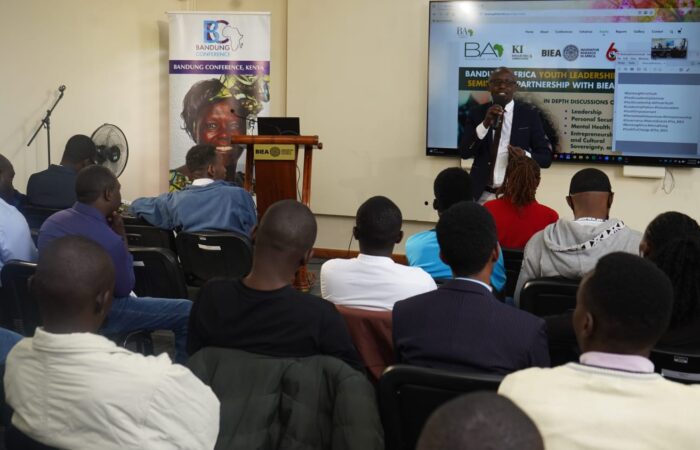
Building on joint work between Bandung Africa and the British Institute in Eastern Africa (BIEA), delegates formalized the Ubuntu Solutions Framework:
- Agricultural Transformation: Investing directly in indigenous, drought-resilient farming techniques rather than relying on imported seed patterns.
- Value-Addition Pipeline: Setting up regional processing centers for commodities like tea and coffee. This ensures that profits from agricultural production remain within local communities.
- Water Sovereignty: Rejecting privatization models for natural water basins and backing community-led, cross-border water management strategies.
6. PLENARY SESSION III: EPISTEMIC FREEDOM, DECOLONIZING CURRICULA, AND EDUCATIONAL AUTONOMY
6.1 Dismantling Eurocentric Epistemologies
The educational panel focused on the urgent need to overhaul continental school curricula. They noted that educational frameworks across Africa still reflect colonial-era structures and priorities.
Current Academic Pipeline: [Eurocentric Rote] —> [Talent Capital Flight]
Proposed Decolonized Model: [Indigenous Tech/History] —> [Sovereign Innovation]
Delegates noted that true political liberation is impossible without intellectual autonomy. To build true regional strength, educational systems must prioritize regional histories, technical self-reliance, and local languages.
6.2 Collaborative Implementation Strategies
In collaboration with the 6th Region TZ initiative and regional bar associations, the committee outlined an implementation roadmap:
1.Curriculum Review: Phasing out textbook materials that obscure or distort pre-colonial history and Pan-African achievements.
2.Institutional Knowledge Exchange: Creating academic exchange programs that allow researchers to share work freely across the continent, bypassing traditional Western publishing barriers.
3.Youth Leadership Pipelines: Integrating civic and environmental training into primary and secondary public schools to prepare the next generation for long-term leadership.
7. PLENARY SESSION IV: ECONOMIC SOVEREIGNTY, THE 6TH REGION, AND AfCFTA OPTIMIZATION
7.1 Mobilizing Diaspora Wealth and Capital Pools
This session evaluated the integration of the African diaspora—formally designated by the African Union as the 6th Region of Africa. The discussion focused on shifting diaspora engagement from basic remittances to structured, high-yield sovereign investment.
STRATEGIC INVESTMENTS VS. TRADITIONAL REMITTANCES
[Diaspora Capital Pools] ======> (Old Model) ======> [Consumptive Remittances]
======> (New Model) ======> [Sovereign Infrastructure Funds]
The assembly called for creating specialized investment options, such as diaspora bonds, to fund major infrastructure projects like rail networks and renewable energy systems.
7.2 Accelerating the AfCFTA Framework
Delegates examined methods to optimize the African Continental Free Trade Area (AfCFTA) framework through civil society and NGO networks:
- Regulatory Streamlining: Standardizing legal procedures across borders to help small and medium-sized pan-African enterprises expand into new regional markets.
- Technological Autonomy: Building localized digital payment architectures to reduce reliance on non-African financial clearing networks and preserve foreign currency reserves.
8. HIGH-LEVEL ROUNDTABLE: CONSTITUTIONALISM, RULE OF LAW, AND CIVIL LIBERTIES
8.1 Balancing National Security and Civil Liberties
The roundtable of jurists and civil liberties groups assessed the state of public discourse across the continent. Co-hosted alongside major regional legal groups, the assembly reaffirmed that sustainable economic growth requires robust protections for human rights and the rule of law.
8.2 Defending the Integrity of Independent Institutions
The assembly emphasized that independent judiciaries and an open press are essential indicators of national stability. To protect these institutions, delegates proposed establishing a legal defense network funded by Bandung Africa to support whistleblowers and human rights defenders.
9. HIGH-LEVEL ROUNDTABLE: GENDER EQUITY, INSTITUTIONAL INCLUSION, AND YOUTH PIPELINES
9.1 The Empowering Young Women (EYW) Initiative
The roundtable reviewed progress on the Empowering Young Women (EYW) initiative. Delegates noted that sustainable development is impossible if women are excluded from high-level decision-making. The assembly called for enforceable, gender-inclusive quotas within national and regional governance bodies to ensure balanced representation.
9.2 Institutionalizing Youth Leadership Channels
Delegates emphasized the importance of engaging Africa’s youth population in leadership roles. The assembly authorized the creation of the Bandung Africa Youth Diplomatic Corps to provide formal pathways for young leaders to participate in regional policy design and international advocacy.
10. ADMINISTRATIVE REFORMS, FISCAL MANAGEMENT, AND MULTI-SECTORAL STRATEGIC ALLIANCES
10.1 Structural and Financial Optimization
To sustain its expanding operations, the Bandung Africa Secretariat adopted the following organizational resolutions:
- Secretariat Expansion: Expanding permanent operational hubs in Nairobi, Kenya and Nigeria to improve program delivery across East and West Africa.
- Financial Accountability: Moving to an independent funding model supported by membership dues, corporate partnerships within the Global South, and targeted philanthropic contributions from the diaspora.
10.2 Inter-NGO Strategic Alliance Network
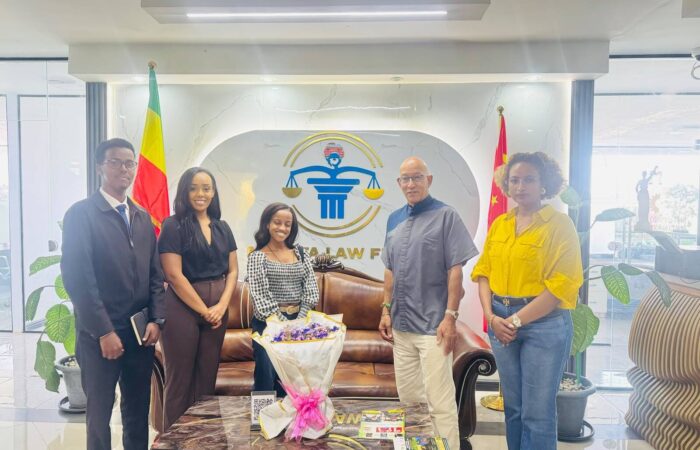
The Secretariat signed cooperation agreements with Makuta Law Firm and the British Institute in Eastern Africa (BIEA). These alliances will create permanent research networks to provide ongoing policy analysis and legal support between annual conferences.
11. THE ARUSHA DECLARATION ON SOUTH-SOUTH RENAISSANCE
Adopted on this 21st Day of November 2025
We, the assembled participants of the Seventh Annual International Bandung Africa Conference, meeting in Arusha, Tanzania:
- Reaffirm our dedication to the original Bandung Principles of 1955, asserting the sovereignty, dignity, and equality of all nations of the Global South.
- Pledge to build permanent legal pipelines to pursue full reparations, return stolen cultural heritage, and repatriate ancestral remains to their rightful communities.
- Commit to advancing the Ubuntu Solutions Framework, ensuring regional control over climate policy, natural resources, and agricultural systems.
- Resolve to decolonize educational systems across the continent, creating learning models that empower youth and support independent innovation.
- Demand the deep integration of the diaspora into continental economic structures, transforming capital flows into long-term infrastructure investment.
12. ROAD MAP TO THE 8TH ANNUAL INTERNATIONAL CONFERENCE (ADDIS ABABA 2026)
12.1 a)Presentation of the 2026 Strategic Roadmap
The Secretariat presented the timeline leading up to the 8th Annual Bandung Africa Conference, scheduled for November 19–21, 2026, at the Hilton Addis Ababa in Ethiopia.
BANDUNG AFRICA STRATEGIC ROADMAP TOWARDS ADDIS ABABA
[Q1 2026] ——————> [Q2-Q3 2026] —————> [Nov 2026]
Launch Framework Regional Consultations 8th Annual Conference
& Legal Working Groups & Educational Seminars Addis Ababa, Ethiopia
12. ROAD MAP TO THE 8TH ANNUAL INTERNATIONAL CONFERENCE (ADDIS ABABA 2026)
12.1 b)Official Summit Overview
The Bandung Africa Secretariat has finalized the overarching theme, operational parameters, and structural focus for the upcoming session. The 8th Annual Bandung Africa Conference is officially scheduled to take place from November 19–21, 2026, convened at the Hilton Addis Ababa on Menelik II Avenue in Addis Ababa, Ethiopia—the historic diplomatic heart of the continent.
The confirmed central theme for the 2026 summit is: “From Liberation to Transformation: Reimagining Africa’s Future Through Unity, Sovereignty, and Global Justice
12.2 Concluding Remarks
Co-Chair Judge Peter Herbert OBE closed the Arusha summit by thanking the Government of Tanzania and the staff of the Mount Meru Hotel for their hospitality. He urged all participants to focus on implementation, turning the shared resolutions of the Arusha Declaration into concrete progress for communities across the continent and the wider diaspora.
13. APPENDIX A: COMPREHENSIVE DRAFT GUIDELINES FOR REGIONAL LEGISLATIVE IMPLEMENTATIONS
13.1 National Heritage Restitution Protocols
This protocol provides draft legislative text for member states to integrate into their national laws. It aims to standardize legal actions regarding the return of cultural assets.
MODEL LEGISLATIVE TEXT: REPATRIATION ACT Section 1. Core Mandate: All cultural properties, historical artifacts, and ancestral remains illegally extracted under colonial governance are declared the inalienable property of the Sovereign State.
Section 2. Enforcement Mechanisms: Public institutions are prohibited from funding exhibitions or research programs involving foreign entities that currently withhold contested national heritage assets.
13.2 Legal Structures for Cross-Border Academic Verification
To support the educational reforms detailed in Section 6, member states are encouraged to adopt the following measures:
- Mutual Recognition Agreements: Establishing standardized qualification equivalencies across regional economic communities to simplify intellectual mobility.
- Protection of Traditional Knowledge: Creating national legal systems to protect indigenous innovations and agricultural practices from unauthorized external patents.
14. APPENDIX B: FORMAL FRAMEWORK FOR MULTI-LATERAL RESOURCE MOBILIZATION
14.1 Operational Architecture of the Diaspora Infrastructure Bond
This section outlines the financial design for channeling diaspora wealth into infrastructure projects without increasing high-interest commercial debt.
DIASPORA CAPITAL ROUTING STRUCTURE
[Diaspora Capital Pools][Bandung Africa Escrow]
[Sovereign Infrastructure Project]
(Regulated Annual Yield)
14.2 Green Development Accountability Protocols
To ensure transparency and prevent the misallocation of resources, all funds managed under the Ubuntu Solutions Framework must adhere to strict governance rules:
- Independent Annual Auditing: Financial records must be audited by neutral third-party firms based in the Global South.
- Local Impact Verification: Funding disbursements will remain tied to clear evidence of community-level environmental and economic benefits.
Complied by:-
Mathew K. Samuel
Diplomatic Liaison Officer
Bandung Africa organization
mathewks@bandungafrica.com
+254745149075
www.bandungafrica.com